

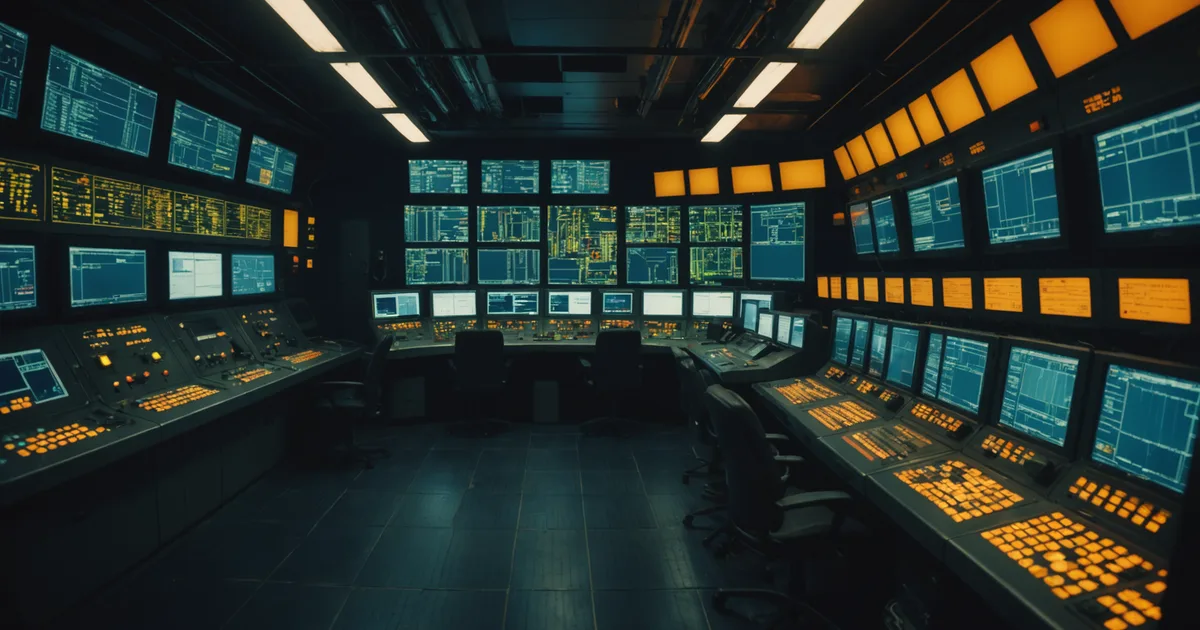
In a control room, a more accurate recommendation can produce worse results if it arrives at the wrong point in the workflow. Interrupt operators at a poor moment, present advice that takes too long to interpret, or compete with primary monitoring for screen space, and they will work around the system. Over time, they may ask for it to be removed.
This pattern is well established in high-stakes decision support. Systems can rest on sound technical foundations and still fail because they do not fit the work. Workflow fit is therefore not a finishing task after the core technology is built. It is a design requirement that determines what the technology must do and how it should appear.
The attention budget problem
Control room attention is finite. Operators must maintain a working picture of process state while responding to events that need action. Each additional system they must watch draws attention away from that primary responsibility.
Put recommendations in a separate interface that operators must remember to check, and they will inspect it in quiet periods and neglect it during busy ones. That reverses the need. Recommendations matter most during abnormal or crowded situations, when operators are least likely to leave the primary monitoring view.
Effective recommendations should reach the place operators already watch, rather than asking them to redirect attention. In practice, that means integrating with the primary monitoring interface, not placing another destination beside it.
The notification design challenge
Proactively pushing every recommendation creates another failure mode. If each new item interrupts attention, operators will treat the system like an alarm. Repeated interruptions invite habituation, so notifications get dismissed unread, much like nuisance process alarms.
Delivery thresholds should reflect when the benefit of receiving advice exceeds the cost of shifting attention. The system needs to judge not only whether it has a recommendation, but whether the operator gains more from seeing it now than from finding it later in a log.
Useful timing signals include an increasing rate of change in relevant process measurements, entry into an operating-envelope region with little historical precedent, an earlier alarm without confirmed operator action within a threshold time, and an anomaly pattern resembling cases where delayed response had serious consequences. These signals come from the same data used to generate the recommendation. They add a judgment about delivery timing, not merely recommendation content.
The decision record problem
A less visible benefit of recommendations is a stronger decision record. Shift logs and operator notes support later review, but they are usually written after the event and depend on recollection. They capture what the operator remembers, not necessarily the information available at the moment of choice.
Logging process state, the recommendation issued, the operator response, whether accepted, modified, or rejected, and the later process outcome creates a fuller record than manual notes alone. That record can support incident review, operator training, and improvement of the recommendation system.
This benefit depends on capturing decisions as they occur. Requiring a separate documentation step leaves the record incomplete precisely during high-workload events, when contemporaneous evidence is most useful.
Managing the trust calibration process
New users often need weeks or months to calibrate their trust in a recommendation system. Early experiences and existing beliefs can produce over-trust or under-trust. The useful target is selective reliance: applying advice where the system has shown value while remaining cautious beyond its demonstrated competence.
Faster calibration requires visible reasoning. When operators can see why advice appeared, which data patterns contributed, and how comparable situations resolved, they can judge the recommendation itself rather than accept or reject it based on a general impression of reliability. Over-trust and under-trust are both failure modes, so explanation is part of the control that gives the system an appropriate role in operational decisions.